Personal Dashboards
Whenever there is a new model release my X (Twitter) feed is full of “<model> just dropped, here are 10 amazing (crazy) things I (others) have already done with it”. I know it’s clickbait to get me to engage with the thread but I almost invariably do anyway, at least for one or two of the threads. The amazing things have been amazingly stable for these past years of model releases. Create a fully functional game, website, newsletter, application, graphic, etc. Then with recent releases I started to notice an addition - create a Dashboard. Sometimes a dashboard will be kicked up a level to a personal assistant, but it seemed to me to essentially be a dashboard. A dashboard that prioritizes your inbox, your projects, your tasks, your health, and your priorities. Being semi-retired with three children in college and one toddler, a personal dashboard might be just what I need. But I don’t need it; my days are manageable in an organic manner. But what about work including my semi-retired work?
I think back to my early days at Microsoft. Our developers had a small, always-on-top widget called Bugger. It would show how many tasks you had assigned and of those how many were active, resolved, or closed. I was part of a team where developers would not perform work unless Bugger showed they had an active task. It was their worklist. Their dashboard, of sorts. Bugger got its worklist from something called Product Studio which was a work-item repository that at one time seemingly the whole company ran on. I could not stand Product Studio, with all its fields many of which had hidden meanings that would be used by different teams in different ways. Why not just put the worklist into Excel, or OneNote or heaven forbid Microsoft Project. But I digress. For an item to show up in a developer’s Bugger, it first had to be in Product Studio with the right assignments. I spent many, many hours sitting with triad counterparts deciding whether to “take” a bug or a feature and what developer to assign it to and at what severity/priority. Human intellect was powering these Bugger dashboards which led to actual work getting done. Now, AI is doing the triage.
When I see today’s AI generated dashboards, I am at first a bit dumbfounded. Are people really so busy they need a Gmail, calendar, and kids soccer practice dashboard? For work dashboards, aren’t the modern day equivalent of Bugger enough? I think about work a bit more since my life was never so busy that I needed a personal dashboard. Like my life, I mostly managed my work organically. As a product leader, I wanted teams to break down their work list but I was agnostic as to what tools they used and how they managed that work list. Sometimes we’d have to use org mandated management systems most of which had an unsatisfactory dashboard of some sort. Unsatisfactory because dashboards are hard especially when trying to serve audiences with different needs. When I was very busy (which was often), I’d have multiple concurrent projects and tasks that would need to be prioritized. I could not drop the ball on any of them. Like many, I practiced zero inbox and used my inbox as a priority list. When that wasn’t enough, I’d resort to making a list and revisiting/revising a list daily.
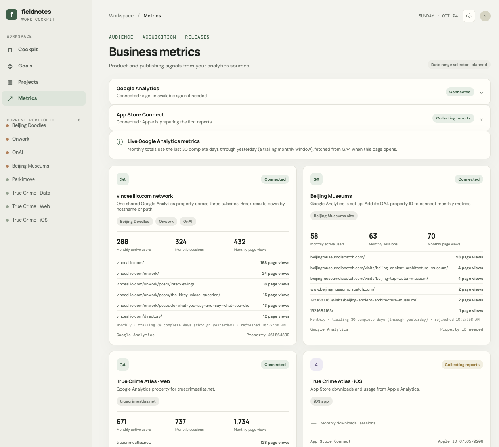
Now, thinking about the project stuff I do in my semi-retired life; I have a few apps and four writing projects, including this blog. Would a dashboard help? I decided to use Codex to try and find out.
First, I had to decide on what kind of things I wanted in my dashboard. On one extreme, I could reproduce Bugger and AI could assign me tasks. Maybe one day, but today is not that day. So I settled on
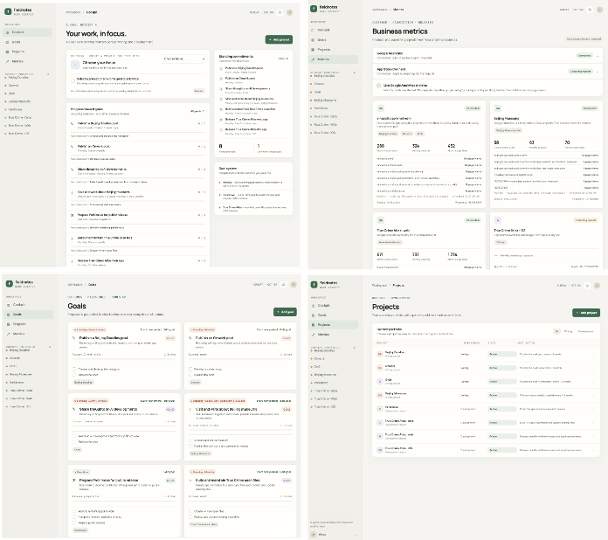
- Artifact goals for each project - how often to release a new version of an app, how often to publish a new museum piece, etc.
- Business metrics for each project - page views, app downloads, monetization, etc.
- Hero metrics for each project - number of posts, etc.
- Quality metrics for each project - writing score, etc.
Codex was able to produce the dashboard easily enough and it sure looked professional. Codex only balked at the writing score task, asking a human to score the posts (I can automate later). I found the project goals the least interesting and business/hero metrics the most interesting. Project goals are the least interesting because I still prefer to work organically. Hero metrics because I like the sense of accomplishment.
In my later working years, some Product Managers became very metric driven. In order to ship anything, a predefined metric needed to move in a positive direction, typically something around engagement. You’d typically check your metrics on a standardized A/B scorecard. Some will say this metric obsession is what led to social media ills of the past decade - rage drives engagement, etc. On one hand, I totally respected the metrics and the science behind it. It is the ground truth. On the other hand, just because a metric moved didn’t make for a better product. Human taste and judgment play a role. I was much more comfortable in this role. So, while I respect dashboards and everyone’s access to them, we should still value organic human organization and judgment. Back in the small room, doing triage with my peer leads using Product Studio, we labored over priorities and assignments. We often had the same arguments and the same misunderstandings. Hours of effort could have been saved if we used AI. And we would have. But we would have also made room for human judgment and taste. Dashboard wisely.